BRAVADO: A Brutal Mirror for Aspiring Screenwriters has West Coast Premiere
The Primal Drive: From “Tell Me a Story” to “Believe Me”
The human impulse to tell stories begins in childhood with a simple plea to “tell me a story Grandpa” and evolves, for some, into a professional obsession to be recognized, respected, and loved for their narrative voice. In the high-stakes ecosystem of Hollywood, this deep-seated desire often leaves writers vulnerable to a “racket” of gatekeepers and predatory dynamics. The film BRAVADO serves as a visceral “meta-thriller” that mirrors this reality, exploring the cost of creative obsession through a lens that many in the industry will find uncomfortably familiar.
The “Rewrite-to-Please” Trap: When Self-Trust is the First Casualty
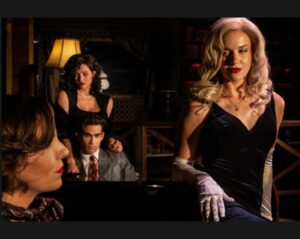
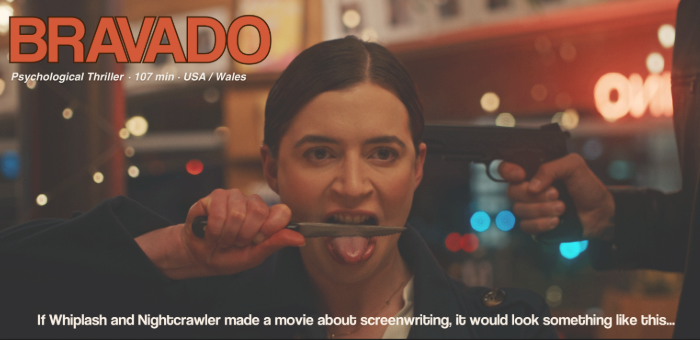
Summarized by its razor-sharp elevator pitch—”Whiplash meets Nightcrawler, but about screenwriting“—the film is anchored by two central performances that ground its harrowing psychological stakes. Caitlin Morris portrays Amy Erickson with nuance and brilliance, capturing the quiet desperation of a talented but insecure writer who has spent fifteen years chasing the Hollywood dream. Her life takes a dark turn when she enters an increasingly toxic collaboration with Luca Malacrino’s believably menacing Patrick Lombardi, a passionate and overbearing director who hones in on her script as a way out of his own slump. This relationship exposes the specific trauma of the “rewrite-to-please” cycle; as Patrick demands “draft after draft after draft,” Amy’s self-trust becomes the first casualty. In her desperate pursuit of a mentor’s approval, she is pushed down an obsessive and self-destructive path, where the frantic desire to make the script “better” only serves to make her psychological state worse.
The Longing to be Believed: A Turning Point in the Real World
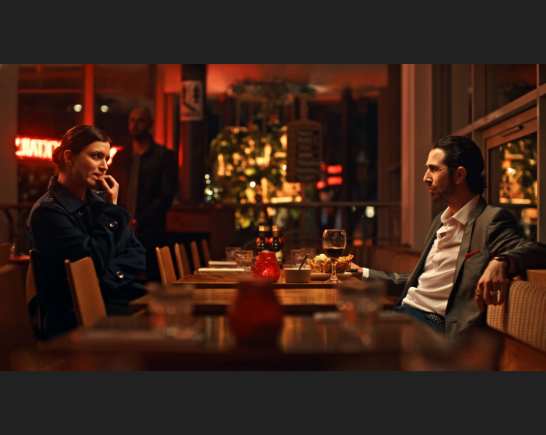
The most visceral manifestation of this obsession occurs when Amy takes her search for “authenticity” into the real world, lying to a date under the guise of script research. This scene serves as a paramount reflection of a writer’s primal longing to be believed, even when they are fundamentally lying. When the date realizes he is being used as a character and erupts in a frightening, insulting fury, the film’s “uncomfortable question” takes on a physical weight. It suggests that for the obsessive creator, the failure of the “story” is an existential threat. If the writing is “bad” or the lie is unconvincing, it isn’t just the script that is at risk—it is the writer’s entire sense of safety and self.
A Triple-Threaded Maze: The Vanishing Vision
What makes Bravado unique is an intricate, triple-threaded architecture that visually represents this erosion of the self. At its heart is the psychological thriller, but it is constantly informed by a gritty UK mafia film-within-a-film. This inner movie is not merely a structural device; it is a living entity that evolves on screen with every “small note” Amy receives. It serves as a stark visual of how easily a writer can be thrown off their original premise, blurring the lines between her actual life and her fictional creation until her own voice is drowned out by the “notes” and demands of another.
The Hero’s Journey: Reclaiming the Voice
The film ultimately charts a nerve-wracking “hero’s journey” that moves from agonizing self-doubt to a hard-won reclamation of self-trust. After months of being molded by Patrick’s overbearing vision, Amy eventually finds herself in the ultimate “lion’s den”—a high-stakes meeting with major producers. When presented with notes that would fundamentally dismantle everything she has worked for, the film reaches its thematic climax. While the mentor Patrick, is revealed at the final hour to be little more than a charlatan ready to pivot and please the room, the true ‘greenlight’ comes only when the writer finally stands her ground. This shift—from a writer who is “talented but insecure” to one who believes in the work she has done—becomes the film’s most powerful statement on the creative process.
The Time Thief: Counting the Cost in Decades
Adding a layer of raw authenticity, the movie integrates genuine documentary interviews with real-world screenwriters. This is where the film introduces its most haunting character: The Time Thief. By featuring writers ranging from wide-eyed newcomers to a veteran who has been chasing the dream for 75 years without a break, the film quantifies the literal cost of these creative traps. It validates the terrifying reality that a writer can spend years, or even a lifetime, reshaping their work to fit someone else’s vision. Director Alex Hanno draws directly from his experience running the screenwriting organization Deadline Junkies to show that these notes are not always given in the writer’s best interest.
The Uncomfortable Mirror: Is Greatness Worth the Sacrifice?
By forcing these threads together, Bravado becomes a mirror that refuses to let its audience off the hook. It asks the haunting question: is the pursuit of greatness worth the sacrifice? Ultimately, the film captures the true texture of the “Hollywood ecosystem,” portraying a world where the search for a recognition can lead to the total erosion of the self—unless that self is strong enough to say “no.” For any writer who has ever felt their story being hijacked, Bravado is a reflection that is as necessary as it is difficult to see.
Screening Information
The West Coast Premiere of BRAVADO at Dances With Films is Sunday, June 28, 12 PM at TCL Chinese 6 Theatre. It is currently sold out, but for those in the LA area, it is worth showing up to try for a last-minute spot. We highly recommend it for anyone interested in the raw, uncomfortable realities of the filmmaking journey.
For more information go to the festival website HERE.

Discover more from RabbleRouse News
Subscribe to get the latest posts sent to your email.