5 Years in the Making: Glendale Opens the Floodgates for Local Public Art
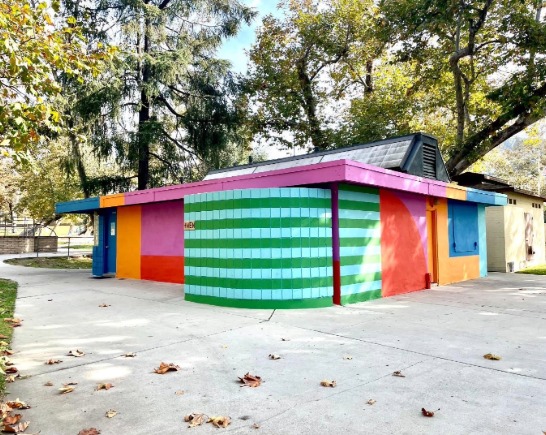
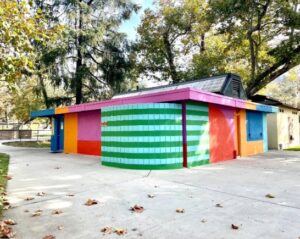
Verdugo Skate Park mural titled "Color Everywhere" by Erin Miller Wray
Transforming spaces by establishing a regional model with groundbreaking mural policy
After more than five years of administrative inertia, community advocacy, and policy drafting, the City of Glendale has officially opened its streetscapes to a new era of public art. The city’s first-ever Mural Ordinance took effect this month, tearing down long-standing regulatory hurdles and creating a clear legal pathway for street art across the municipal landscape. By codifying a formal framework for murals on private property, Glendale is not merely modernizing its own skyline—it is positioning itself as a regional pioneer, establishing a battle-tested municipal model that we’re hopeful neighboring cities across Los Angeles County will replicate.
Standardizing the Canvas
For years, local artists and property owners attempting to navigate the city’s approval channels faced vague standards and unpredictable oversight. The new ordinance replaces that confusion with a standardized life-cycle framework, setting explicit procedures for every stage of a mural’s existence—from initial installation and routine maintenance to eventual de-installation. This systematic approach ensures that both public municipal walls and private commercial facades can legally host large-scale visual works without plunging property owners into administrative limbo.
It is precisely this kind of structural clarity that makes vibrant public works possible, such as Erin Miller Wray’s eye-catching mural “Color Everywhere” at Verdugo Skate Park. To turn municipal policy into actual street-level canvas, the city simultaneously launched a streamlined online Mural Permit Application hosted on the centralized Glendale Permits Portal. Designed to strip friction out of the approval pipeline, this digital hub provides artists and property owners with a transparent submission platform aimed at expediting reviews, cutting turnaround times, and bringing new creative vision to blank walls in record time.
Incentivizing Expression
Recognizing that administrative policy means little without real-world incentives, local leadership moved decisively to subsidize the first wave of street art. On September 29, 2026, the Glendale City Council passed a companion resolution specifically designed to jumpstart installations across high-visibility corridors. Under the terms of this resolution, the city will cap review fees for the first 100 applications submitted for murals visible from the public right-of-way, charging them only the heavily discounted “Mural Design Review Fee – Small Commercial Business/Non-profit” rate.
By granting this financial break regardless of the property owner’s actual commercial footprint or corporate size, Glendale is directly lowering the barrier to entry for local creative projects. The initiative effectively invites small business owners, non-profit institutions, and major commercial landholders alike to partner with local artists, transforming bare concrete and stucco into dynamic neighborhood landmarks without facing prohibitive municipal fees.
Art with Purpose: Reinforcing the Jewel City’s Identity
This landmark policy marks a major cultural evolution for the “Jewel City.” As the fourth largest municipality in Los Angeles County with nearly 200,000 residents, Glendale has increasingly relied on its Arts & Culture Commission to weave creative expression directly into urban planning, economic development, and daily civic life. The department’s expansive footprint already anchors the community, from the flagship 93,000-square-foot Central Library to the historic Brand Library & Art Center, a regional visual arts hub and performance venue housed within Leslie C. Brand’s iconic 1904 mansion. The mural ordinance builds upon this rich legacy, bringing curated artistic vision out of gallery spaces and directly onto neighborhood streets.
Ultimately, the ordinance strikes a deliberate balance between municipal stewardship and creative freedom. “Public art has the power to transform spaces, tell our community’s stories and create a stronger sense of place,” said Director of Library, Arts & Culture Lessa Kanani’opua Pelayo-Lozada. “This ordinance provides the clarity and structure needed to support murals while preserving the creativity and artistic expression that make them meaningful.” For artists, business owners, and residents ready to kickstart their own wall installations, detailed policy guidelines and the online permit application are available directly through the city’s arts portal HERE.

Discover more from RabbleRouse News
Subscribe to get the latest posts sent to your email.